
SDG 1: No Poverty

Our Commitment to Promote Inclusive Education to develop Sustainable Communities
Enhancing access to education through scholarships and flexible learning options. Community engagement initiatives can address local needs, including outreach programs and NGO partnerships. The university can promote research on poverty reduction and support sustainable development projects. Additionally, career development programs and networking opportunities can improve job prospects for students. Raising awareness and empowering student-led initiatives will foster advocacy, while regular impact assessments can refine strategies for greater effectiveness

2.4 Billion Plus

Total Amount of Academic Scholarship Awarded in Year 2024

26,725

Total Number of Students 2024

23,512

Total Number of Students receiving Financial Aid 2024

9,335

Low Income Students receiving Financial Aid 2024

18-23

Average age of our students

57% Male Students

Gender Distribution

43% Female Students

Gender Distribution

Global Engagement

18

Countries

371

Total Number of Students

$850,000

Total Amount of Academic Scholarship

Student Success & Service Access

5345

Bottom Finacial Quintile
Admission Target

5185 (97%)

Achieved

4000

Bottom Finacial Quintile
Student Success Target

3891 (97%)

Bottom Finacial Quintile
Student Success Target

EXPANDING ENTREPRENEURIAL OPPORTUNITIES THROUGH POVERTY ALLEVIATION PROGRAM

72.91 Million

Project Funding Secured

13

Faculties Engaged

1832

Job created

1.9 Billion

Revenue Generated by the Startups

1300

Coaches Engaged

202

Instructors Engaged

600

Trainees Trained through NAVTTC program

90

Partnerships Secured

700

Industries experts

1600 Million

Investement Made by Startups

Events and Resources

Policies

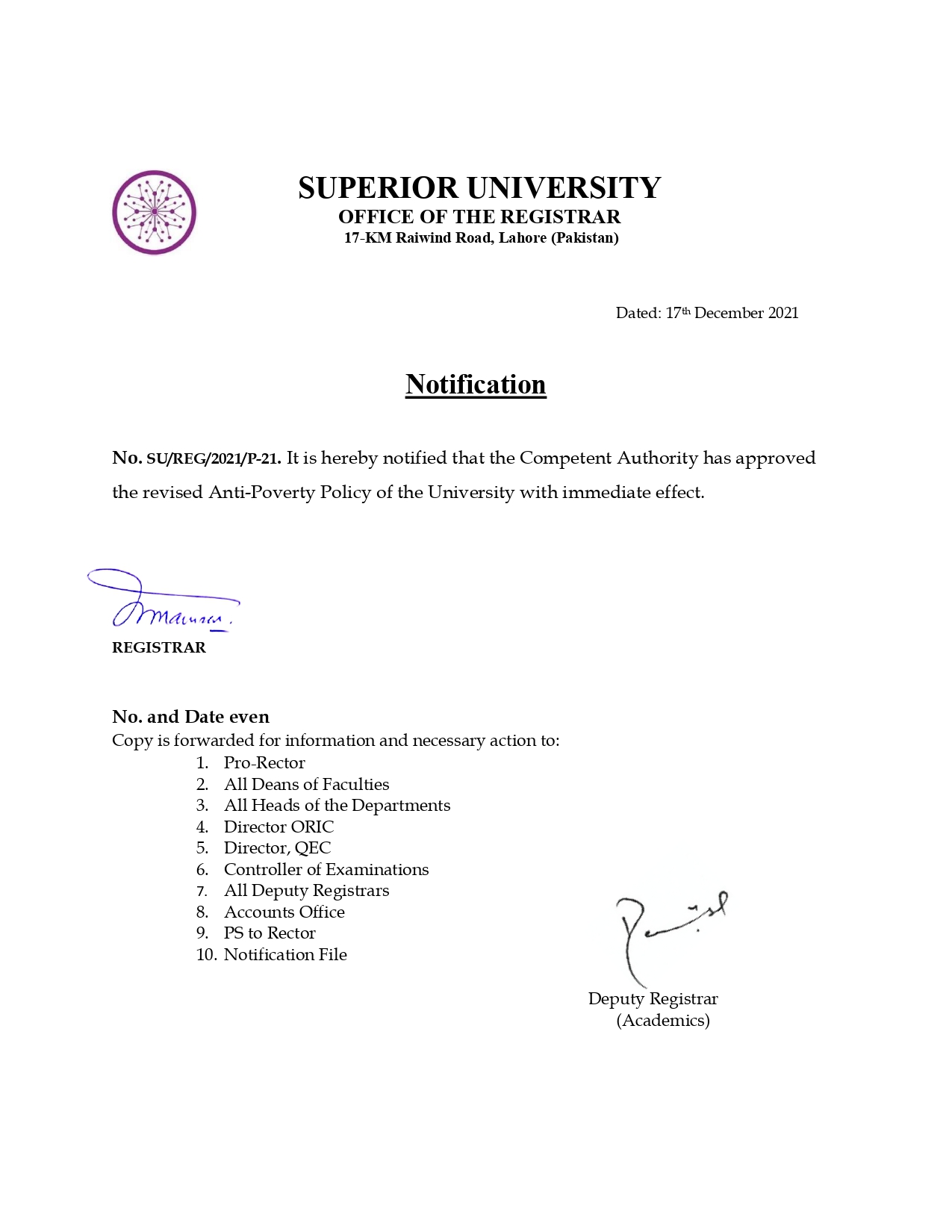
Anti Poverty Policy

The Superior University is committed to fostering an inclusive and prosperous learning environment. This Anti-Poverty Policy outlines the measures and objectives aimed at providing quality education opportunities to underprivileged students. It establishes a framework for awarding scholarships based on academic merit and financial need, ensuring that education remains accessible to all, regardless of financial circumstances.

Download Policy ↓